

Spouse & family.
Already married, planning to marry, or sponsoring a parent, child, or sibling — there's a path to bring your family to the United States.
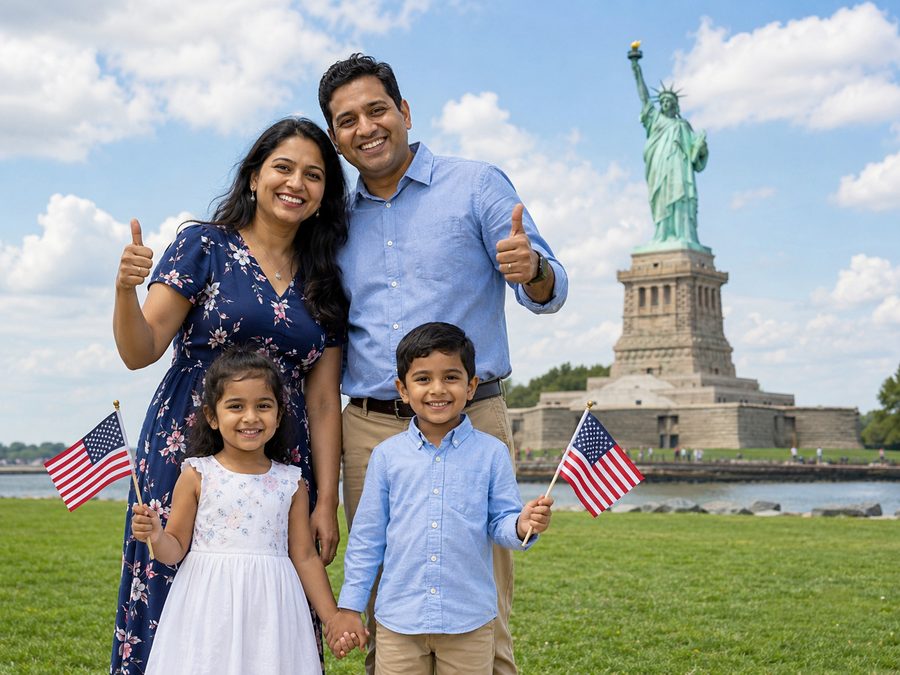
- Married to a U.S. citizen — the spouse visa (CR-1/IR-1). An immigrant visa processed at a U.S. consulate; your spouse enters as a permanent resident, with no wait line as an "immediate relative."
- The recommended route. For married couples, the spouse visa produces a lawful permanent resident on entry — no separate adjustment-of-status step.
- Other relatives. U.S. citizens can also petition parents, children, and siblings; permanent residents, spouses and unmarried children.
- We handle the whole filing. The I-130 or I-129F petition, the DS-260 or DS-160, and the I-864 affidavit of support.
- From intake to approval. A licensed U.S. immigration attorney stays on your file the entire way.
The spouse visa (CR-1 / IR-1)
The CR-1 and IR-1 are immigrant visas for the foreign-born spouse of a U.S. citizen. For nearly every married couple, this is the best route. The spouse of a citizen is an "immediate relative," so there is no annual cap and no wait line. The visa is issued at a U.S. consulate in the spouse's home country. On entry, your spouse becomes a lawful permanent resident. There is no separate green-card application to file afterward.
- CR-1 (Conditional Resident): issued when the marriage is less than two years old at admission. The two-year condition is later removed with Form I-751.
- IR-1 (Immediate Relative): issued when the marriage is two years or older at admission — a ten-year green card, no conditions.
Married to a green-card holder rather than a citizen? Your spouse is a family second-preference (F2A) immigrant. The process is the same, but the spouse must wait for a visa number. If you are not yet married, the answer is usually simple. Marry, then pursue the spouse visa (see the K-1 note below).
Want the full walk-through? Our dedicated site spousevisa.com covers the CR-1/IR-1 spouse visa step by step — the petition, the affidavit of support, the consular interview, and removing conditions.
How the process works
- Petition. The U.S. citizen or permanent resident files Form I-130 for the qualifying relative with USCIS.
- National Visa Center / consular prep. We prepare the immigrant visa application (DS-260), the affidavit of support (I-864), and assemble the civil and financial documents.
- Consular interview. Your relative attends an interview at the U.S. consulate in their country of residence.
- Entry to the U.S. Your relative enters the United States as a lawful permanent resident.
Other family members
Family-based immigration reaches well beyond spouses. The law sorts family petitions into two groups. Which group applies decides whether there is a wait for a visa number:
- Immediate relatives of U.S. citizens — spouses, unmarried children under 21, and parents (of a citizen who is 21 or older). No annual cap and no wait line.
- Family-preference relatives — a citizen's adult or married children and siblings, and a permanent resident's spouse and unmarried children. These are numerically limited. The wait depends on the category and country. Current dates are on the State Department's monthly Visa Bulletin.
We'll tell you which category your relative falls in — and the realistic timeline — during the consultation.
How we help
We prepare and review every form and exhibit, build the relationship-evidence packet, manage NVC follow-ups, prepare you and your partner for the interview, and respond to any Requests for Evidence. A licensed U.S. immigration attorney stays on the file from intake through approval.
A note on the K-1 fiancé visa. For couples who are engaged but not yet married, the K-1 fiancé visa is a separate route. It is the last option we recommend. It requires a second, separate green-card (adjustment-of-status) filing after the wedding. Recent policy changes have made it slower and more burdensome. For nearly all couples, marrying and pursuing the CR-1/IR-1 spouse visa is faster, less expensive, and simpler.
Sources: INA § 201(b) (8 U.S.C. § 1151) · INA § 203(a) (8 U.S.C. § 1153) · INA § 204 (Form I-130) · INA § 216 (conditional residence). General information, not legal advice.
Common questions.
Should I use a K-1 fiancé visa?
For nearly all couples, no — we recommend marrying and using the CR-1/IR-1 spouse visa instead. It produces a permanent resident on entry, avoids a separate adjustment-of-status filing, and isn't subject to the recent policy changes that have slowed the K-1. We'll discuss the K-1 only if it's genuinely the better fit for your situation.
Can a permanent resident sponsor a spouse?
Yes. Both U.S. citizens and lawful permanent residents can petition for a spouse with Form I-130. A citizen's spouse is an immediate relative with no wait line; a permanent resident's spouse falls under the family-preference categories.
What if my spouse is already in the U.S.?
If your spouse entered lawfully and is otherwise eligible, adjustment of status (Form I-485) may be available from inside the United States. See our Green Card page.
Does income matter?
Yes. The petitioner must meet the I-864 affidavit-of-support income threshold for the household size. A joint sponsor can be used if income is below the threshold.
Bring your partner home.
Free consultation with a U.S. immigration attorney. No obligation.